

Table of Contents
- What to Look for When You Shop Zero Waste Kitchen Essentials Online
- Essential Plastic-Free Kitchen Swaps for Every Home Cook
- How to Reduce Kitchen Waste: A Step-by-Step Approach
- The Benefits of Paperless Towels and Swedish Dishcloths
- Cost-Benefit Analysis: Do Zero Waste Swaps Actually Save Money?
- End-of-Life Disposal and Small-Space Zero Waste Solutions
- Conclusion
- Frequently Asked Questions
Last Updated: September 28, 2026
What to Look for When You Shop Zero Waste Kitchen Essentials Online
Shopping for zero waste kitchen essentials online comes down to two checks most buyers skip: material safety and true cost per use. Get those right and you avoid the two most common regrets, flimsy tools that fail in weeks and coatings you would rather not have near food.
The zero waste kitchen is a kitchen that swaps single-use items for durable, reusable, and compostable alternatives, from glass containers to cloth towels.
Material safety and certifications to check
Start with what touches your food, because the material determines both safety and lifespan. Food-grade stainless steel in 304 or 18/8 grades resists corrosion and does not leach, which is why it is the default for utensils, straws, and storage. Borosilicate glass handles thermal shock better than soda-lime glass, so it can go from freezer to oven without cracking. Untreated bamboo is naturally antimicrobial but degrades faster than metal or glass and should be oiled periodically to prevent splitting.
Here is how the common materials actually compare:
- Silicone: food-grade only. Platinum-cure silicone is the safer choice because it avoids the peroxide byproducts some cheaper silicone can carry. It is heat-stable but not widely recyclable, so buy it to last.
- Natural fibers: untreated cotton, linen, and cellulose. Look for a recognized compostability certification rather than a vague "eco" badge, since dyes and finishes can block home composting.
- Coatings: skip nonstick once it is scratched, because the coating is what fails first. Bare cast iron, carbon steel, and stainless steel outlast coated pans and can be re-seasoned instead of replaced.
- Wood and bamboo: food-safe when untreated. Avoid pieces sealed with unknown lacquers, and never soak them, since water is what causes cracking and hidden mold.
Price per use vs. sticker price
A reusable item almost always costs more upfront than a disposable pack. The number that matters is price per use. Divide the purchase price by how many times you will realistically use the item before it wears out.
Essential Plastic-Free Kitchen Swaps for Every Home Cook
The highest-impact plastic-free kitchen swaps are the ones you touch every day: food storage, dishwashing, and utensils. Replace those first and the rest of the kitchen follows naturally.
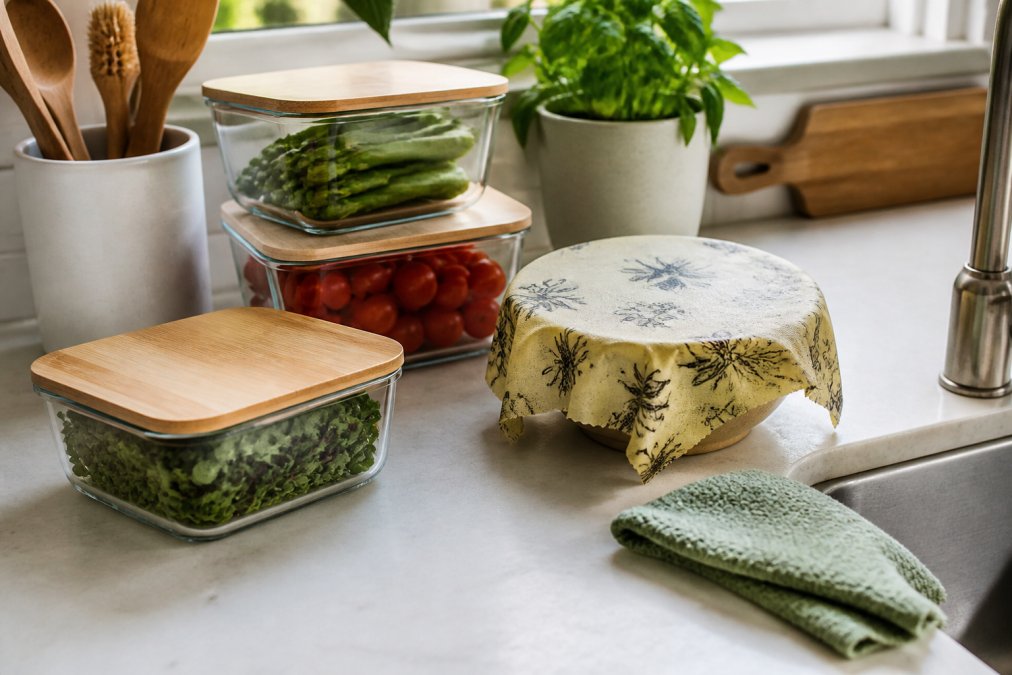
Reusable food storage solutions
Glass containers with lids that seal properly handle leftovers, freezer portions, and reheating without staining or holding onto odors. Beeswax wraps cover bowls and wrap sandwiches, then get rinsed and reused for months. Silicone bags replace single-use zip bags for snacks and freezer storage.
Sustainable dishwashing tools
Paper towels disappear fastest of anything in the kitchen. Swedish dishcloths and paperless towels absorb like a sponge, wring out, and go through the wash hundreds of times. A dish brush with a replaceable head and biodegradable sponges round out the sink area.
How to Reduce Kitchen Waste: A Step-by-Step Approach
Reducing kitchen waste works best as a sequence, not a single overhaul. Do these five steps in order and each one makes the next easier.
- Audit for one week. Keep every disposable you throw out and note what it was. Most households find two or three items dominate the bin.
- Replace the top offenders first. Paper towels, plastic wrap, and zip bags are the usual leaders.
- Set up a refill routine. Find a local refill station or buy concentrates for cleaning products.
- Shop in bulk with your own containers. Buy dry goods package-free where you can.
- Compost food scraps. Even a countertop bin keeps organic waste out of the garbage.
Zero waste grocery shopping tips
Bring your own bags and containers, and buy dry goods from bulk bins so you control the quantity and skip the packaging. Plan meals before you shop so you buy what you will actually cook. Store produce correctly and you cut spoilage, which is waste you paid for twice.
Refillable cleaning supplies and bulk shopping
Refill stations let you top up dish soap, all-purpose cleaner, and hand soap in your own bottles, so you buy the product without buying new plastic each time. Concentrates do the same job at home: one small bottle makes several spray bottles of cleaner.
The Benefits of Paperless Towels and Swedish Dishcloths
Paperless towels and Swedish dishcloths replace paper towels with a washable cloth that absorbs more and lasts for months. A Swedish dishcloth is a thin cellulose-and-cotton cloth that soaks up spills, wipes counters, and then goes in the wash or the dishwasher.
- Absorbs several times its weight in liquid
- Machine washable and dishwasher safe
- Compostable at end of life
- Available in a range of designs, so the sink still looks good
Cost-Benefit Analysis: Do Zero Waste Swaps Actually Save Money?
Yes, over time. Reusable items cost more at checkout but less per use, and the gap widens the longer you keep them. The upfront cost is real, so the honest math is to compare total spend over a year, not the first purchase.
Swap |
Upfront Cost |
Ongoing Cost |
Break-Even Point |
|---|---|---|---|
Swedish dishcloths |
Higher than one roll |
Wash only |
A few weeks of paper towel use |
Glass containers |
Higher than plastic |
None |
Months of bag and wrap purchases |
Refillable cleaners |
Bottle plus refill |
Refill liquid only |
After the first refill |
Food savers |
One-time buy |
None |
The first ingredient you stop throwing out |
End-of-Life Disposal and Small-Space Zero Waste Solutions
Plan for disposal when you buy, and plan for a small kitchen. Both make a zero waste setup last, and both are the parts most guides skip.
What actually happens to each item at end of life
Disposal rules vary by municipality, so the honest answer is to check your local program before you assume anything is recyclable or compostable. That said, the general patterns are consistent:
- Natural-fiber cloths and untreated bamboo: home-compostable if they are undyed and uncoated. If they were used with harsh cleaners, they still break down, but check your municipal compost program's rules on chemically treated textiles.
- Glass and stainless steel: recyclable in most curbside programs and effectively infinite in lifespan. Glass is one of the few materials that can be recycled repeatedly without losing quality, which is why it is the safest long-term buy.
- Silicone: durable but not widely recyclable. Some municipalities accept it in flexible-plastic streams; many do not. Buy it to last, and treat disposal as a last resort.
- Beeswax wraps: once the wax cracks or the cloth is stained, they can be composted if the fabric is natural. Many can also be re-waxed at home with a beeswax bar, which extends their life by months.
- Bamboo and wood utensils: compostable, but only if untreated. Lacquered or glued pieces belong in the garbage, not the green bin.
Small-space zero waste solutions
Small kitchens do not need fewer habits, they need tighter systems. The goal is to keep the same function with less storage and less visual clutter.
- Stackable, nesting glass containers instead of a mismatched set. Square shapes waste less shelf space than round ones.
- Two or three cloths, not a drawerful. Rotate them so one is always dry, which prevents the damp-smell problem that makes people give up on cloth.
- One dish brush with a replaceable head rather than several brushes. The handle lasts, only the head is replaced.
- A single countertop compost bin with a carbon filter, emptied every few days. If you have no outdoor space, a countertop electric composter or a municipal organics pickup is the realistic path.
- Refill concentrates instead of full-size bottles. One small concentrate bottle replaces several spray bottles and takes up a fraction of the cabinet.
Conclusion
The hardest part of going zero waste is starting without overbuying. Pick the swaps you will actually use, check the materials, and let the savings build over time.
Frequently Asked Questions
What are the best zero waste kitchen essentials for beginners?
Start with items you use daily. Swedish dishcloths replace paper towels, glass containers replace plastic wrap, and bamboo utensils replace disposable cutlery. A zero waste kitchen doesn't require a full overhaul on day one. Pick two or three swaps, use them consistently for a month, then add more. The goal is building habits, not buying everything at once.
How do I start a zero waste kitchen on a budget?
Focus on swaps that pay for themselves fastest. Paperless towels and Swedish dishcloths replace repeated paper towel purchases, so they recoup cost within weeks. Glass containers work for leftovers and bulk shopping. Buy quality items gradually rather than all at once. Many zero waste kitchen essentials cost more upfront but save money over months of daily use.
Are Swedish dishcloths actually effective for cleaning?
Yes. Swedish dishcloths absorb up to 15 times their weight in liquid and handle countertops, spills, and dishes. They're machine washable and last for months before composting. For heavy messes, wring them out and keep going. They replace paper towels for most kitchen tasks, which is one of the clearest benefits of paperless towels for busy households.
What materials should I look for in sustainable kitchen products?
Look for glass, stainless steel, bamboo, organic cotton, and natural fibers. These materials are durable, non-toxic, and recyclable or compostable at end of life. Avoid products labeled only as "eco-friendly" without specifics. Check for certifications where available and prefer items that can be repaired or repurposed rather than replaced.